
October 2026
Overview
- What: A monumental mosque of Early Ottoman architecture featuring hospice (zaviye) and administrative functions, renowned for its stone, tile, and woodwork ornamentation [3, 4, 6]. A zaviye is a religious and social complex where the period’s dervishes and travelers were lodged and hosted; the mosque simultaneously served as an administrative center where state affairs and official audiences were conducted [4, 6].
- Where: Located in the city of Bursa, one of the primary developmental and political centers of the early Ottoman state [3].
- Why it matters: Symbolizing the post-Interregnum revival, the monument is celebrated for its inscriptions and comprehensive decorative program [4, 6]. A decorative program refers to a pre-planned, comprehensive, and integrated decorative scheme that determines which embellishments, motifs, and materials are deployed across all surfaces of a building [3, 4, 6].
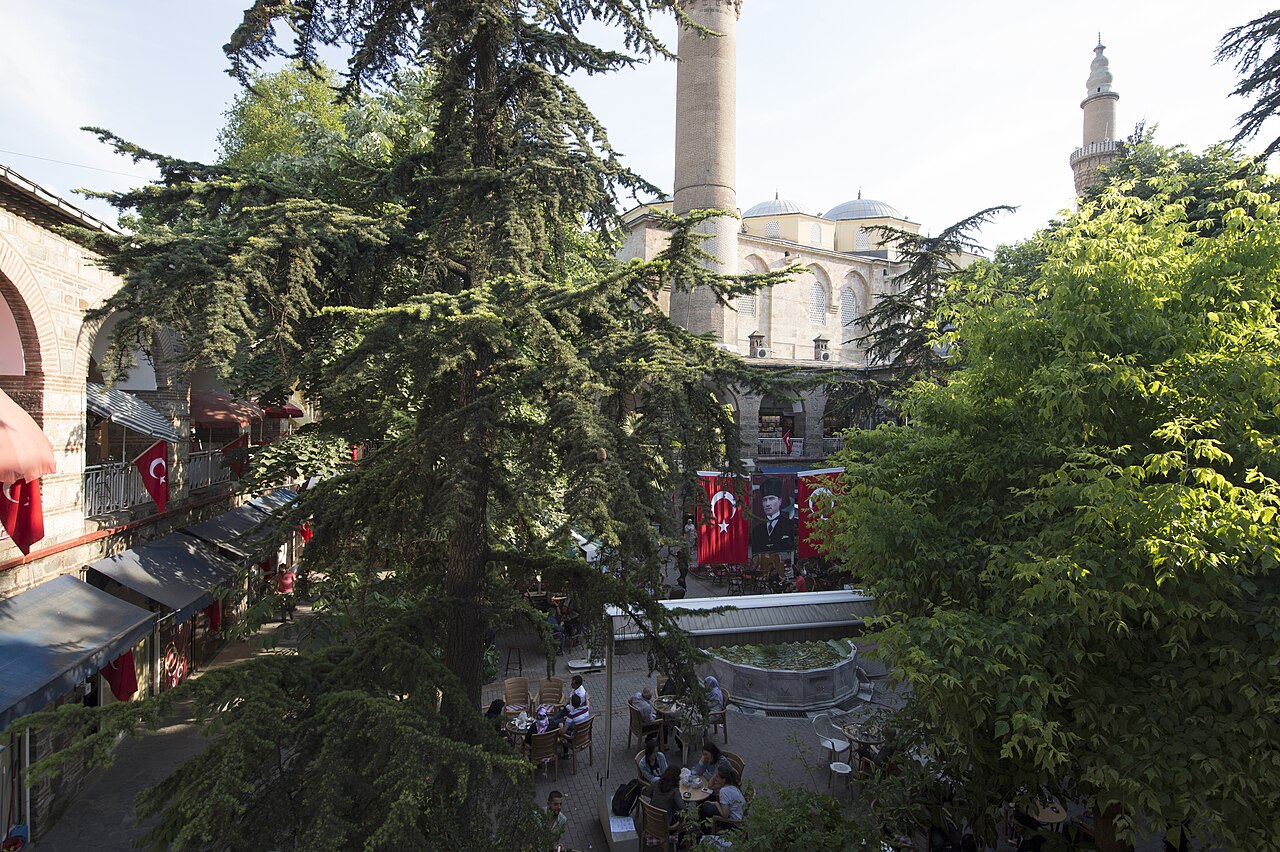
Rising in Bursa, one of the capitals of the Ottoman Empire, the Green Mosque (Yeşil Cami) is regarded as one of the most distinctive masterpieces of early Ottoman architecture [3]. Erected during the reign of Mehmed I (Çelebi Mehmed), this grand edifice was not conceived solely as a sanctuary for prayer [4]. The complex also addressed the administrative needs of the state [4]. Furthermore, it functioned as a multifaceted center catering to the spiritual dynamics of its era [4, 6].
Historical records indicate that the building was erected in the immediate aftermath of the turbulent Ottoman Interregnum (Fetret Devri) [4]. This interval was an era of disintegration marked by succession crises and internal unrest [4]. The mosque stands as the tangible manifestation in stone of the consolidation efforts that followed this period [4]. This struggle for resurgence is mirrored with equal clarity in the monument’s fine details [6]. The mosque distinguishes itself through decorative embellishments seamlessly integrated into its architecture [3, 6]. These decorations have held the attention of art historians for centuries [3, 6].
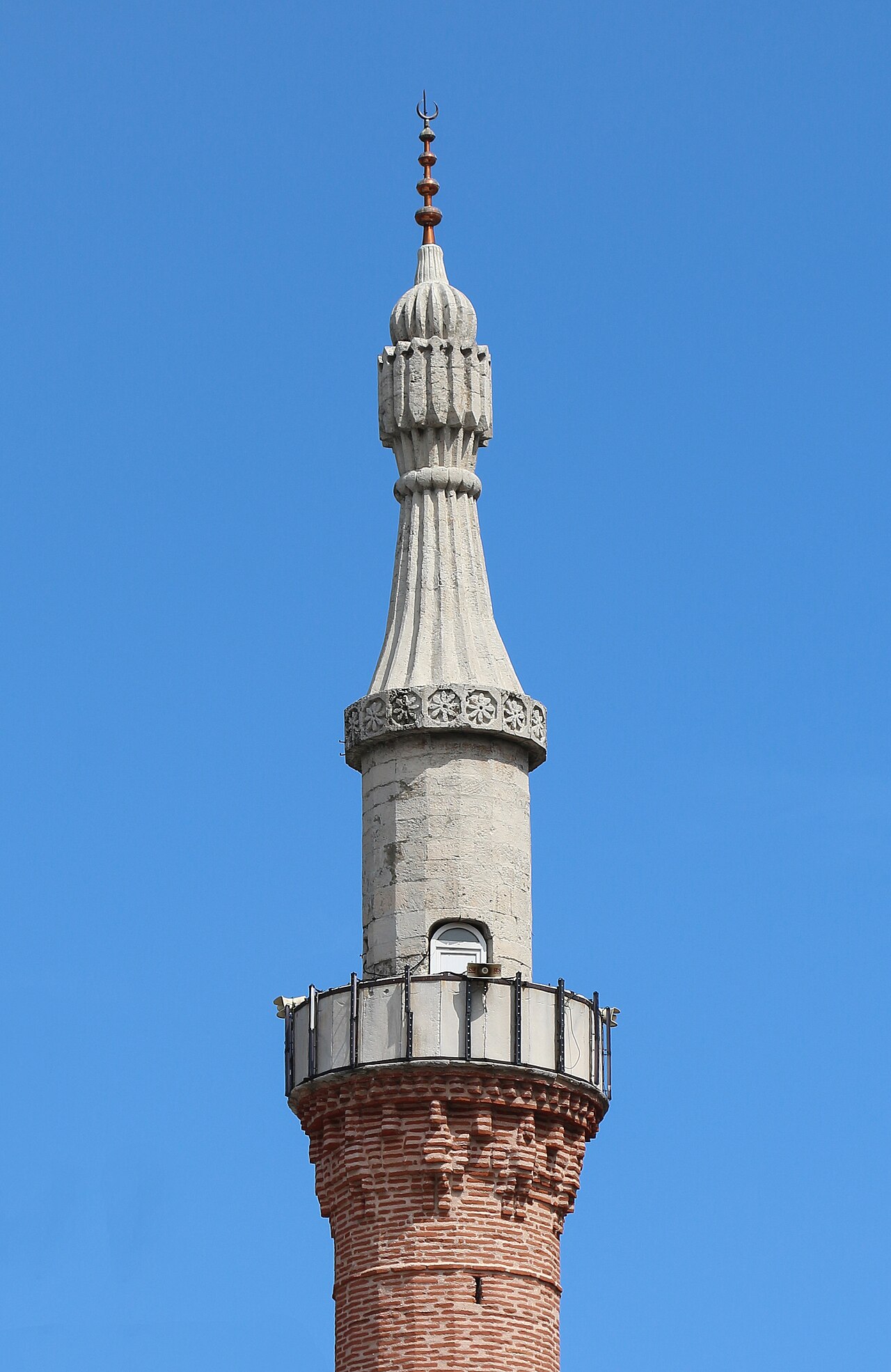
The northern façade displays the era’s refined stonework [6]. Stepping inside, one immediately senses the convergence of distinct artistic disciplines [3]. This ambiance emanates from the rich harmony orchestrated by tiles, stucco, and woodwork [3]. According to sources, the Green Mosque represents one of the most mature expressions of the artistic tradition that emerged in the Early Ottoman era [3]. This artistic ethos crystallized across Bursa, Iznik, and Edirne [3].
Where is it?
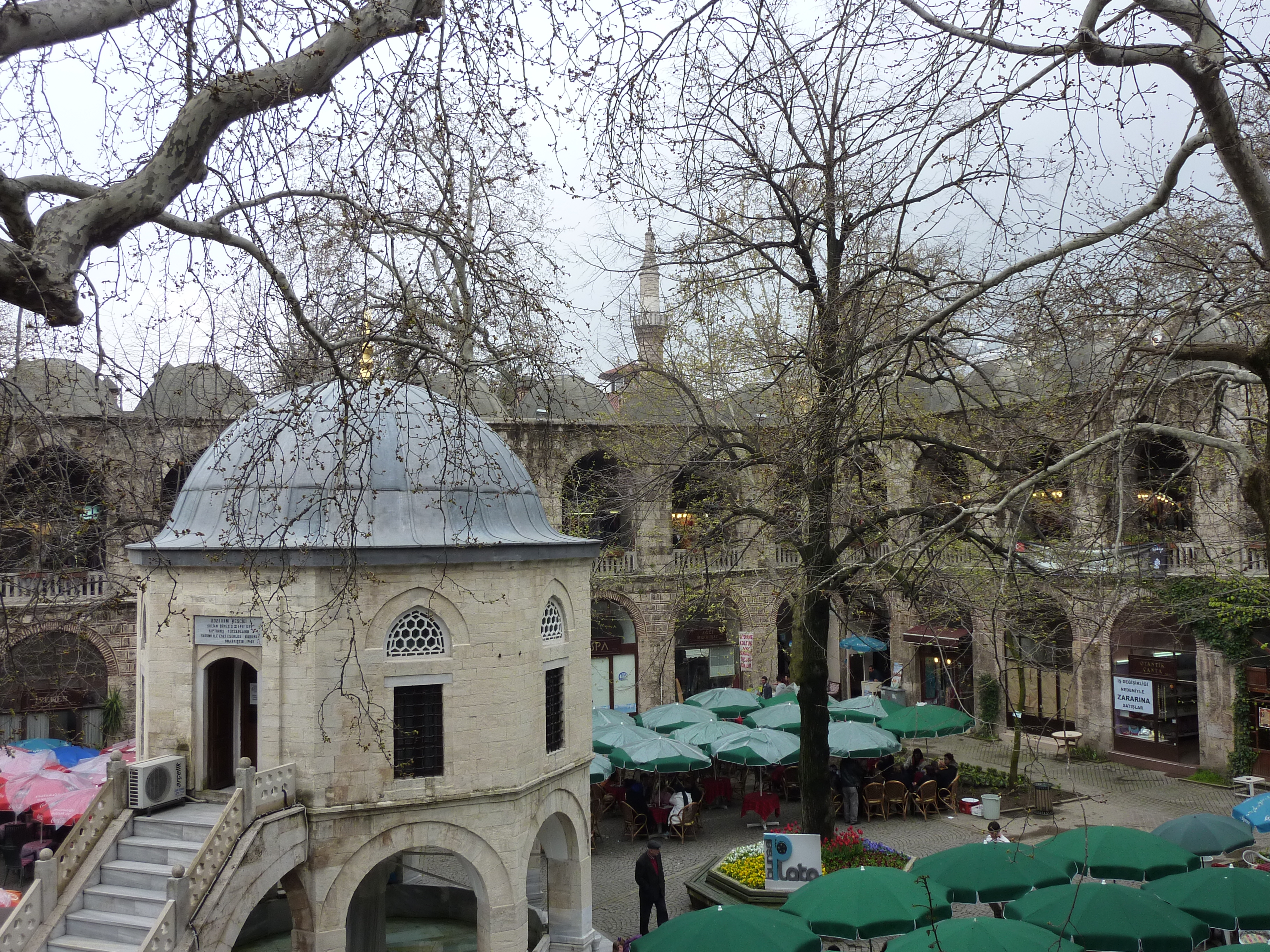
The Green Mosque is situated in the historic city of Bursa, recognized as one of the most vibrant centers of early Ottoman art and politics [3]. During the state’s early formative phase, the city served as a primary locus of attraction [3]. Throughout this epoch, monumental edifices were constructed in rapid succession across the city [3]. Sources note that the building shares its cultural heritage with other monumental sanctuaries [2]. These include other Bursa landmarks such as the Grand Mosque (Ulu Cami) and the Yıldırım Mosque [2].
At the time of its construction, the mosque was not designed merely as a place of worship [6]. The structure was concurrently arranged as an extensive hospice (zaviye) and communal gathering place [6]. Its hospice character enabled the building to host wayfarers and dervishes [6]. Research demonstrates that the layout was conceived to accommodate the Ahi and Abdal groups, who played critical roles in the social fabric of the period [6]. The Ahi community constituted a religious-economic guild organization of merchants and artisans [6]. The Abdal group comprised communities of dervishes who provided spiritual and military support during the foundation of the state [6]. Accommodating these circles within the hospice quarters of the mosque was explicitly intended [6]. In this respect, the complex established an exceptionally strong relationship with its surroundings [4, 6]. Consequently, the monument formed a central focal point for both the spiritual and administrative life of the city [4, 6]. The mosque also retained the character of an administrative center where official state business was conducted [4, 6].
History & Origins
The monument was commissioned by the Ottoman Sultan Mehmed I, also known as Çelebi Mehmed [4, 6]. The mosque was built during a delicate stage when the state had newly emerged from the Timurid invasion [4]. It is simultaneously the product of a new epoch in which succession struggles had drawn to a close [4]. According to historical records, the Green Mosque is a masterpiece symbolizing Ottoman resurgence [4, 6]. The state’s ambition to reassert itself before the world was directly embodied within this monument [4, 6].
In addition, the edifice is interpreted as an expression of gratitude [6]. Through this foundation, Sultan Mehmed offered his thanks to the Ahis and Abdals who had backed his ascent to the throne [6]. Scholars explicitly point out that the building was not an ordinary place of worship [4]. The mosque also fulfilled administrative roles, functioning as an arena where state authority was exercised [4]. Thanks to its foundation inscriptions, the historical evolution of the monument has been documented in detail [4]. Within this sanctuary, the sultan’s public authority was formally codified through architecture [4].
The question of why the stone carvings were left unfinished has prompted varying viewpoints in historical scholarship [6]. Certain specialists tend to account for unfinished historical edifices through political factors [6]. Another group focuses on economic grounds [6]. However, regarding the Green Mosque specifically, sources record that a peaceful environment prevailed during those years [6]. Furthermore, no economic distress was documented in the records of the period [6]. Researchers therefore attribute the incompletion of the decoration to the sudden deterioration of Mehmed I’s health [6].
Traces of notable figures feature prominently in the mosque’s cultural life in subsequent centuries [2]. Calligrapher İbrâhim Efendi of Kütahya is known to have served as an imam at the mosque [2]. The artist also inscribed calligraphic compositions onto the mosque’s walls [2]. He additionally served as the sheikh of the Hacı Şevkî Efendi Lodge (Dergâh) [2]. İbrâhim Efendi remains an esteemed artist who left his enduring imprint upon Bursa’s mosques [2].
Architectural Form
The Green Mosque of Bursa is a synthetic monument that coalesces all the decorative arts of the early Ottoman architectural program [3]. Foremost artistic disciplines of the era—including woodwork, stucco, stonework, and glazed tiles—converge here [3]. These arts were executed across the building in singular harmony [3]. The architecture reflects the political and cultural interactions that unfolded across the 15th century [3]. These dynamics are keenly felt within the building’s decorative program [3]. The decorative program refers to the planned, systematic aesthetic scheme encompassing all ornamentation applied across the interior and exterior surfaces of the structure [3].
Stonework and Unfinished Details
The northern façade hosts the intricate compositions of early stone ornamentation [6]. However, recent research has brought new evidence to light [6]. According to these studies, a major portion of the stone decorations on the northern façade remained unfinished [6]. The incomplete section is far more extensive than previously assumed [6]. Entire zones across the façade remain completely unworked [6]. Other sections were left unfinished after having only their outlines sketched [6]. Drawing an “outline” (kontur) on stone indicates that only the outer boundary contours of the motifs were incised onto the stone surface [6]. In these areas, the silhouettes of the motifs were delineated, yet the interior portions were never carved, hollowed out, or rendered in relief with three-dimensional depth [6].
The existence of ornamentation lacking relief depth and detailed carving is clearly documented in records [6]. These omissions were not scattered across the façade at random [6]. On the contrary, they were organized within a specific order [6]. The omissions were distributed with such mastery that they did not appear jarring to the eye [6]. This controlled execution within the architectural program mirrors the haste surrounding the construction process [6]. It also underscores the sensitive circumstances of the era [6].
Early Byzantine Spolia
Among the most striking components of the construction materials employed in the Green Mosque are pieces of spolia [4]. These are historic stones dating to the Byzantine era [4]. In architecture and archaeology, the concept of spolia refers to the reuse of antique building stones and architectural fragments salvaged from previous civilizations in a new edifice [4]. This architectural usage is entirely distinct from the well-known devshirme system concerning the levy of children and Janissaries [4]. Research reveals that these Byzantine spolia were utilized exclusively along a specific route [4]. This path corresponds to the ascent toward the mosque’s royal lodge (hünkar mahfili) [4]. The mahfil is a private gallery reserved for the sultan’s prayer and personal security [4].
Apart from these pieces situated along the royal loggia passage, no comparable spolia stones are encountered anywhere else in the structure [4]. The salvaged components consist of various column elements [4]. Among them are Corinthian column capitals [4]. Corinthian capitals are ornate classical column heads carved with curling acanthus leaves [4]. Composite column capitals are also present in the building [4]. Composite capitals feature a hybrid design uniting the ram-horn volutes of Ionic columns with the foliage reliefs of Corinthian columns [4]. In addition to these, column shafts and column bases were incorporated [4]. The bases in question are of the Attic type [4]. An Attic column base is a stepped, classical marble base situated at the lowest point of a column, formed by two convex circular moldings separated by a concave scotia groove [4]. Dating to the 5th and 6th centuries of the Early Byzantine period, these artifacts possess high aesthetic quality [4].
Historians do not interpret the choice of these materials merely as a measure of economic thrift [4]. Nor was this selection a simple aesthetic quest [4]. When evaluating the public and political stature of the royal loggia, this selection acquires much greater significance [4]. Selecting the magnificent stones of the preceding empire represents a deliberate statement [4]. It is noted that Sultan Çelebi Mehmed intended to convey a political message through this choice [4]. The sultan sought to demonstrate that he had inherited the legacy of a mighty empire [4]. Historical sources record that he aimed to prove his own sovereign power by this means [4].
Harmony of Tile, Stucco, and Wood Arts
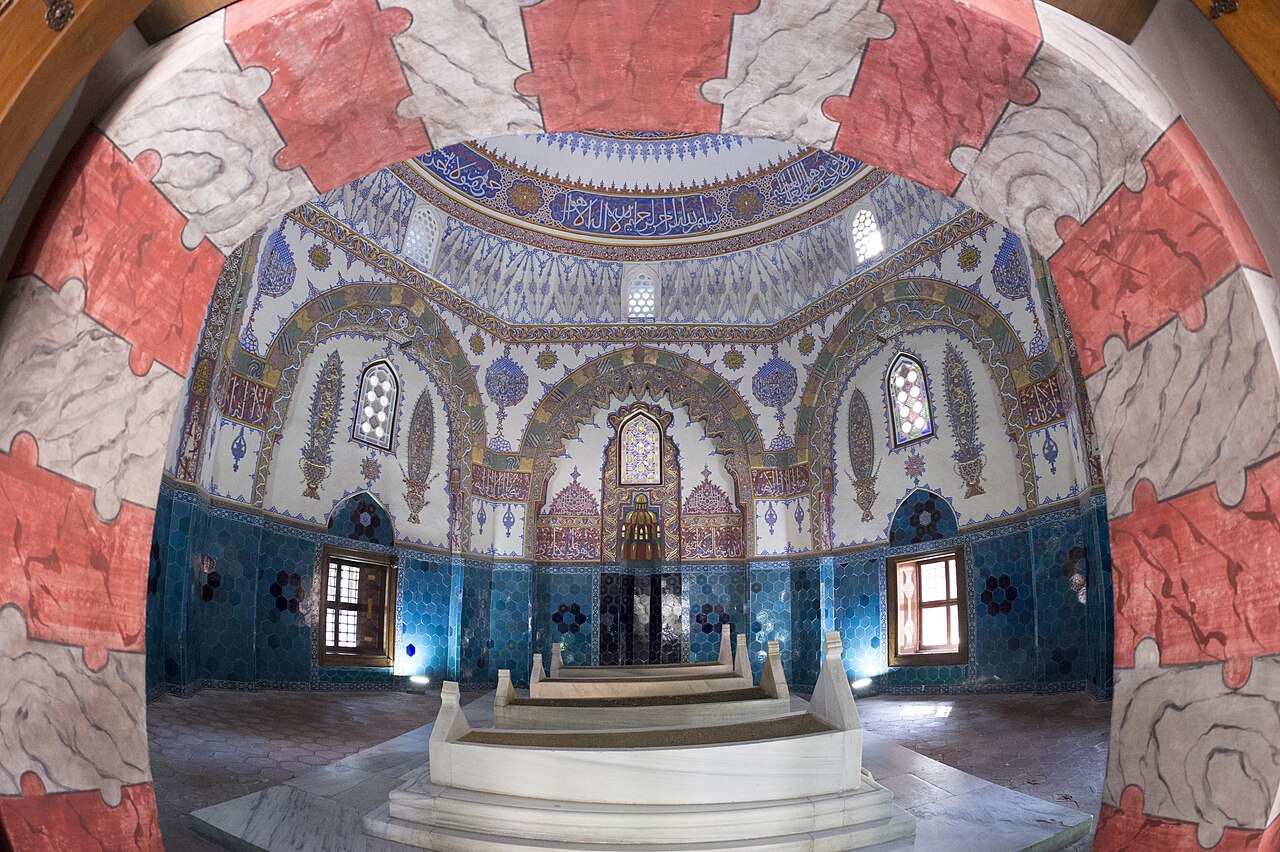
The Green Mosque stands among the foremost monuments richest in illustrating the material diversity of early Ottoman architecture [3]. Eye-catching tiles adorn its walls [3]. These tiles constitute the core component enriching the spatial atmosphere of the monument [3]. Stucco reliefs were utilized alongside the tile revetments [3]. Woodwork likewise forms an integral element of the space [3]. All these components were orchestrated to establish a flawless equilibrium with the architecture [3].
Art historians emphasize the multifaceted nature of the decorative motifs found throughout the building [3]. These motifs carry both formal and symbolic connotations [3]. In the early period, this decorative vocabulary first originated in the architectural experiments of Iznik [3]. This visual language attained its most mature expression in Bursa with the Green Mosque [3]. The diversity of ornamentation across the monument illuminates its epoch [3]. Through this symbolic language, the political and cultural transformation of the period is transmitted to the present day [3].
Calligraphic Inscriptions
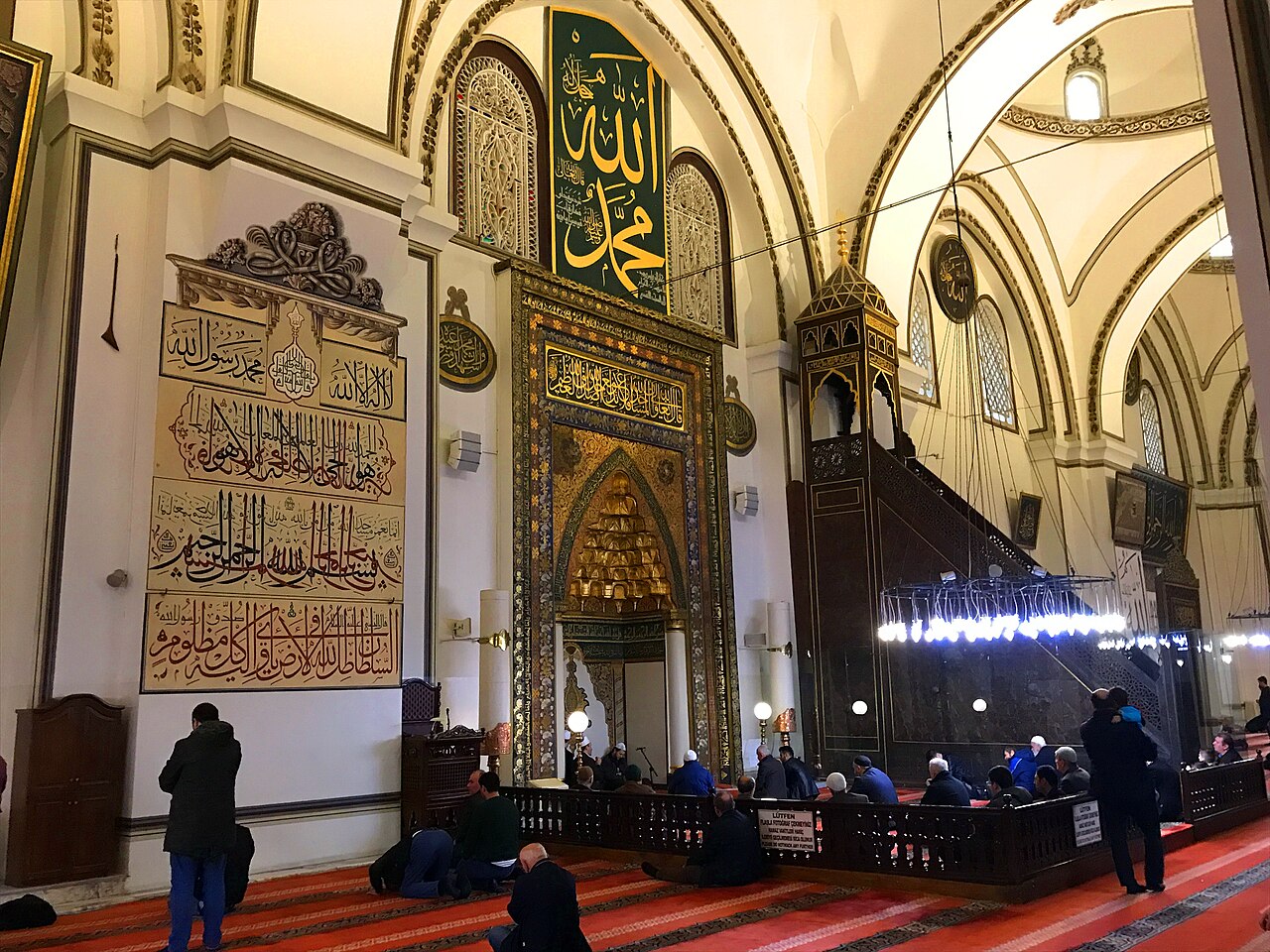
The inscriptions decorating the walls of the mosque are of exceptional value [2]. These inscriptions heighten the spiritual depth of the edifice [2]. They also count among the primary elements enhancing the aesthetic worth of the building [2]. Among these inscriptions are prized specimens of calligraphy [2]. The examples in question were penned by Calligrapher İbrâhim Efendi, the imam of the Green Mosque [2]. Sources have not been able to determine which lineage (silsile) this Kütahya-born calligrapher belonged to [2]. In calligraphy, a silsile denotes the traditional master-apprentice chain and stylistic genealogy through which knowledge and aesthetic conventions are transmitted [2]. The records likewise fail to clarify who the artist’s master was [2].
Nevertheless, the artist’s calligraphy enriches the walls of sanctuaries across Bursa [2]. These works can be observed in the Grand Mosque of Bursa, the Yıldırım Mosque, and the Green Mosque [2]. Modern studies have examined the calligraphic stencils belonging to İbrâhim Efendi [2]. This research documents the contributions the calligrapher offered to the city [2]. Thus, the Green Mosque has become an important focal point [2]. The monument distinguishes itself not only through its architecture, but also through original masterpieces of calligraphy [2].
Visiting Notes
The Green Mosque is an exceptional stop for visitors wishing to observe Bursa’s early Ottoman heritage on site [3]. Enthusiasts eager to examine the richness of architectural decoration should make sure to visit [3]. Visitors touring the building can closely examine the Byzantine column capitals [4]. These capitals are located along the stairway leading up to the royal loggia (hünkar mahfili) [4]. The pieces date to the Early Byzantine era of the 5th and 6th centuries [4]. Furthermore, close inspection of the stone carvings on the northern façade is recommended [6]. On this façade, incomplete contours can be discerned [6]. These are zones where the boundaries of the motifs were incised into the stone without being carved out to their full depth [6].
While admiring the calligraphy in the mosque’s interior, one may look for the signatures left on the walls by Calligrapher İbrâhim Efendi [2]. Visiting hours are not stated in the sources. No information regarding prayer times is provided in the sources. The restoration status of the mosque and transportation details are not mentioned in the text. Confirm these through official channels prior to your visit.
References
- [1] Arama - TDV İslâm Ansiklopedisi: https://islamansiklopedisi.org.tr/yesil-cami—bursa
- [2] Bursa Yeşil Cami İmamı Hattat İbrâhim Efendi — Semra Güler (2020, ARTUKLU AKADEMİ): https://doi.org/10.34247/artukluakademi.704118
- [3] ERKEN DÖNEM OSMANLI MİMARİSİNDE SÜSLEME PROGRAMININ BURSA YEŞİL CAMİ ÖRNEĞİNDE İNCELENMESİ — Duygu Gök, Selen Durak (2018, DergiPark (Istanbul University)): https://dergipark.org.tr/tr/pub/paradoks/issue/38952/432271
- [4] THE REUSE OF BYZANTINE SPOLIA IN THE GREEN MOSQUE OF BURSA (BURSA, YEŞİL CAMİ’DE BİZANS DEVŞİRMELERİNİN YENİDEN KULLANIMI) — Ü. Melda ERMİŞ (2016, DergiPark (Is: http://dergipark.gov.tr/iuarts/issue/0/263265
- [5] İZNİK YEŞİL CAMİ ÇİNİLERİNE GEOMETRİK BAKIŞ — Hülya Bozyokuş (2018, DergiPark (Istanbul University)): https://dergipark.org.tr/tr/pub/ijhar/issue/55202/758259
- [6] Bursa Yeşil Cami’nin Yarım Kalan Taş Süslemeleri Hakkında Bir Değerlendirme — Sevinç Gök İpekçioğlu, Şakir Çakmak, Lemye Gündüz (2025, Sanat Tarihi Yıllığı / Jo: https://cdn.istanbul.edu.tr/file/JTA6CLJ8T5/D510CE01EAF64ABE80B73F113693E2DC
Konum
Harita: © OpenStreetMap katkıcıları. Haritada büyüt · Google Haritalar · Apple Haritalar
İşaret yaklaşık konumu gösterir; kesin konum için yerel kaynaklara bakın.
This article is compiled from scholarly monographs and official architectural inventories. Please verify site access conditions, visiting hours, and ongoing conservation status via official heritage authorities prior to visiting.