

Overview
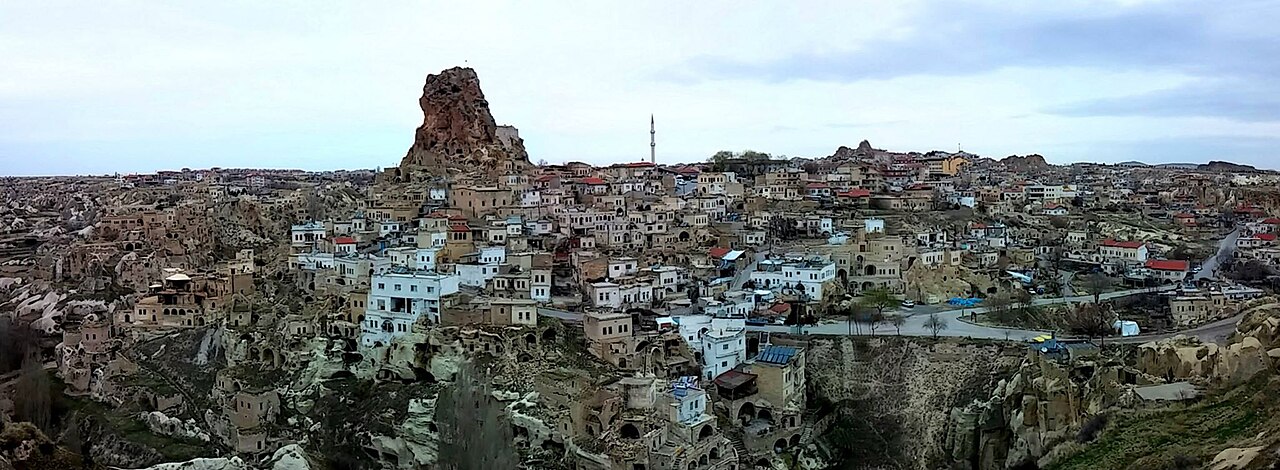
- What? Fortresses and historical structures carved into the rock, located in the Uçhisar and Ürgüp districts of Nevşehir.
- Where? At the highest points of Cappadocia, within the boundaries of the Göreme Historical National Park.
- Why is it important? These fortresses, which bear traces from Antiquity to the present day, are among the significant components of the cultural heritage, alongside their natural beauty.
Introduction
The Uçhisar and Ortahisar rock fortresses are among the natural and historical structures of Cappadocia. Carved into steep cliffs, these fortresses were used both for strategic defense and as residential areas. Uçhisar Castle rises on a 60-meter-high stone cone; in Ortahisar, a 90-meter rock fortress known as Sivrikaya is located in the center of the town. These structures carry the traces of different communities from ancient times to the present day.
Where is it?
Uçhisar Castle is located in a settlement within the Uçhisar district of Nevşehir, at the coordinates 38°37′49″N 34°48′20″E [1]. These coordinates indicate the north (N) and east (E) directions. For instance, 38°37′49″N is approximately 38 degrees, 37 minutes, and 49 seconds north of the Equator; 34°48′20″E is located 34 degrees, 48 minutes, and 20 seconds east of Greenwich. Ortahisar is situated 5 km west of the Ürgüp district, at the coordinates 38°37′15″N 34°51′53″E [2]. Both are located around stone cones, which are among the highest points in Cappadocia. Uçhisar Castle is 6 km from the center of Nevşehir, while the Sivrikaya fortress in Ortahisar is 20 km from Ürgüp.
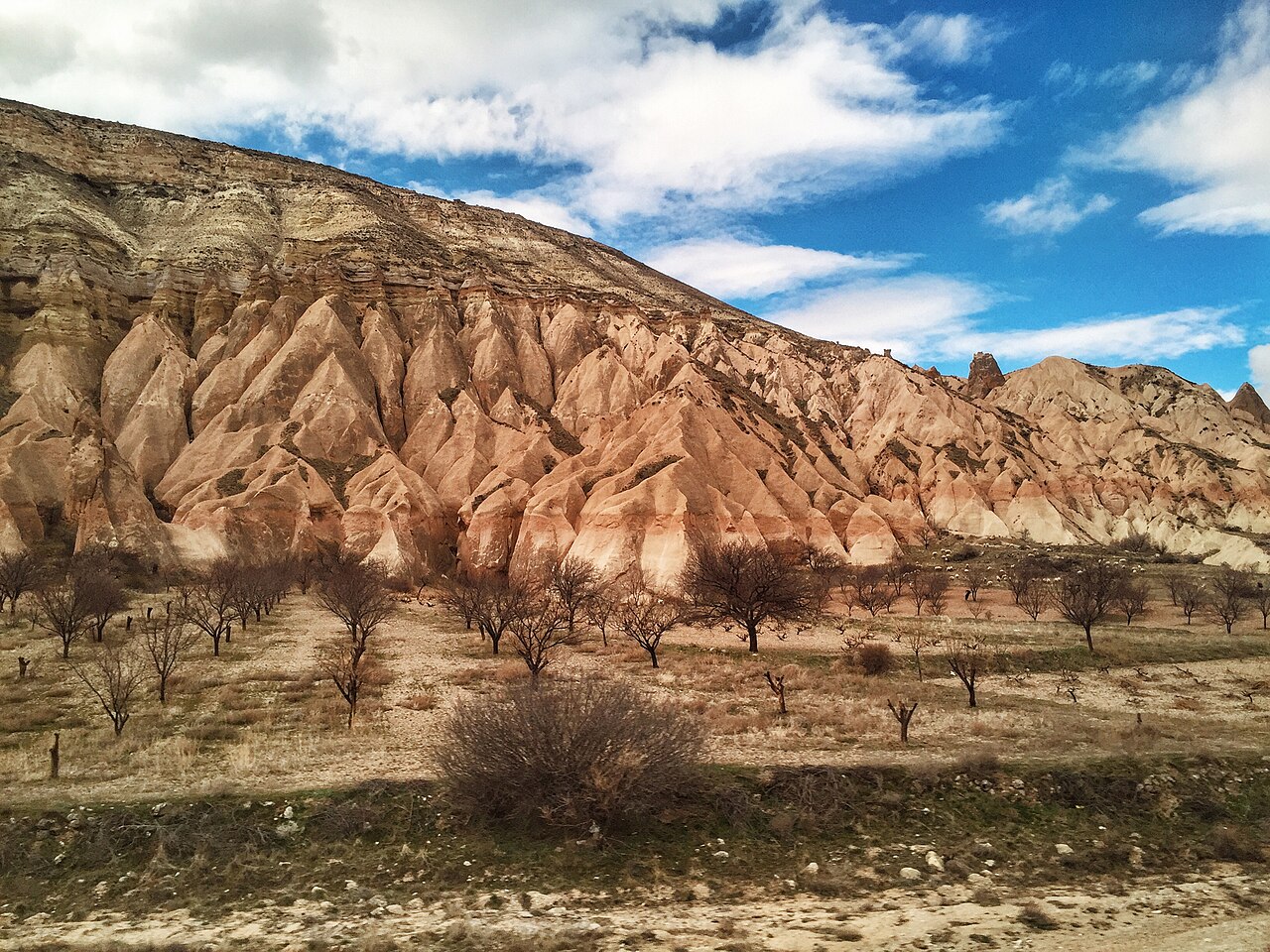
Surrounding the fortresses are examples of Cappadocia’s characteristic vernacular architecture: houses, cold storage facilities, and historical churches carved into the stone cones. In Ortahisar, natural beauties such as the Damsa River valley and the Talaş Stream also await visitors [2].
History & Origins
Although the construction date of Uçhisar Castle is uncertain, its history extends back to the Roman and Byzantine periods. Some sources suggest that the castle may have been built before the 1st century [1], while others claim it was used starting from the 4th century BCE. The castle was particularly used for defensive purposes by Christian monks in the 17th century.
Ortahisar Castle (Sivrikaya) was carved during the time of the Eti people and is located at an elevation of 1,200 meters [2]. The fortress was used for both strategic and residential purposes. Ortahisar, which is part of the Göreme Historical National Park inscribed on the UNESCO World Heritage List in 1985, is also defined as the cultural and geographical center of Cappadocia [2].
Historically, there was an area in Uçhisar known as the Pigeon Valley (Vasil Potamus). In this valley, birdhouses carved for the production of bird droppings existed until the 1970s [3]. In Ortahisar, historical structures such as the Hallaç Monastery and the Sarıca Church have served the region for many years.
To examine the history of Uçhisar Castle in greater depth, one must mention the influence of the Hittites in this region. As noted in [3], the Pigeon Valley was known as Vasil Potamus in ancient times and was part of the defensive strategies of the Byzantine Empire. The Hittites were an ancient civilization that ruled in Anatolia between 1600 and 1200 BCE. This region was under their influence, and the natural rock formations played a role in their defensive use. From the 7th century onwards, the Byzantines established a protective zone here to prevent the spread of Islam. The natural beauty and seclusion of the rock formations were among the primary reasons for the defensive use of this area.
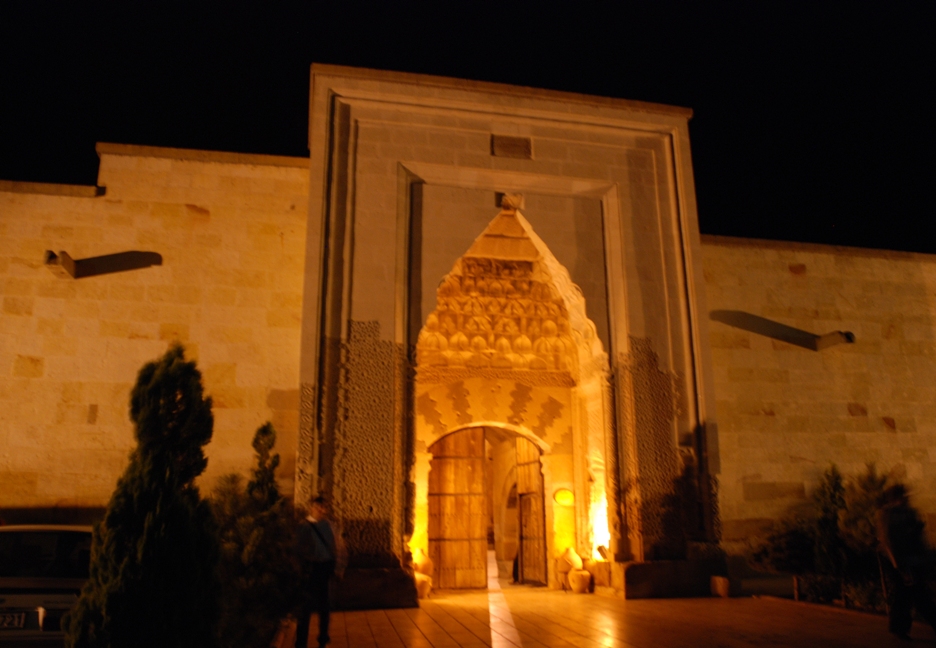
During the Seljuk period, the strategic importance of the fortresses increased. As mentioned in [3], the Seljuks were a Turkish state that arrived in Anatolia in the 11th century CE and governed the region. The Seljuks built caravanserais for commercial and military purposes. Caravanserais were resting and protection areas for traveling merchants and soldiers. Some structures from this period have survived to the present day, preserving their historical character.
Architectural Form
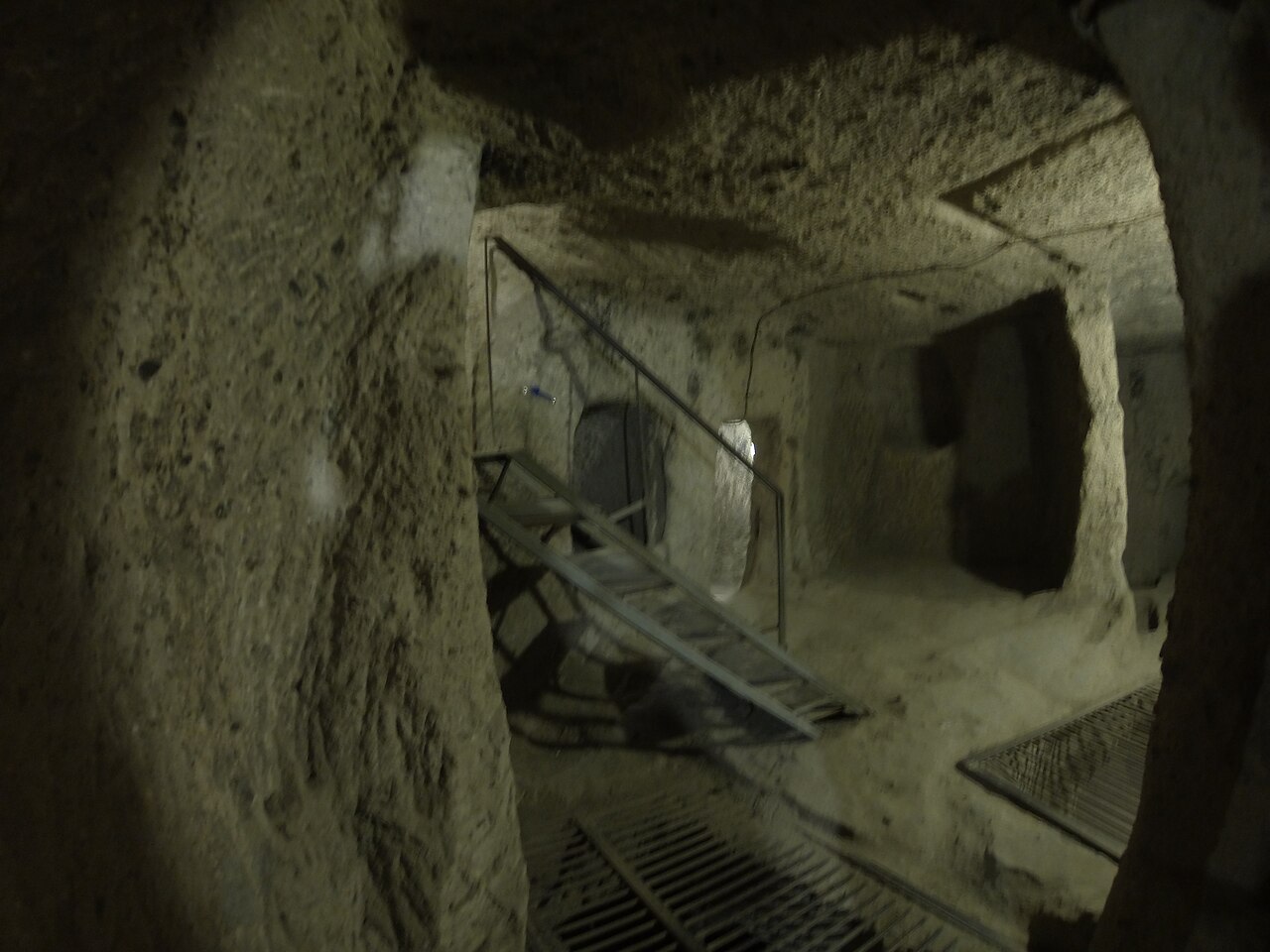
Uçhisar Castle rises on a 60-meter-high stone cone [3]. The castle is carved from natural rock and contains rooms and halls connected by narrow passages. These passages may date back to the Byzantine period; those entering the castle discover a historical cave system [3]. The castle also houses the St. Basil Church, dating from the 6th century. This church is carved into the stone cone, and reaching its entrance requires a challenging walk [3].
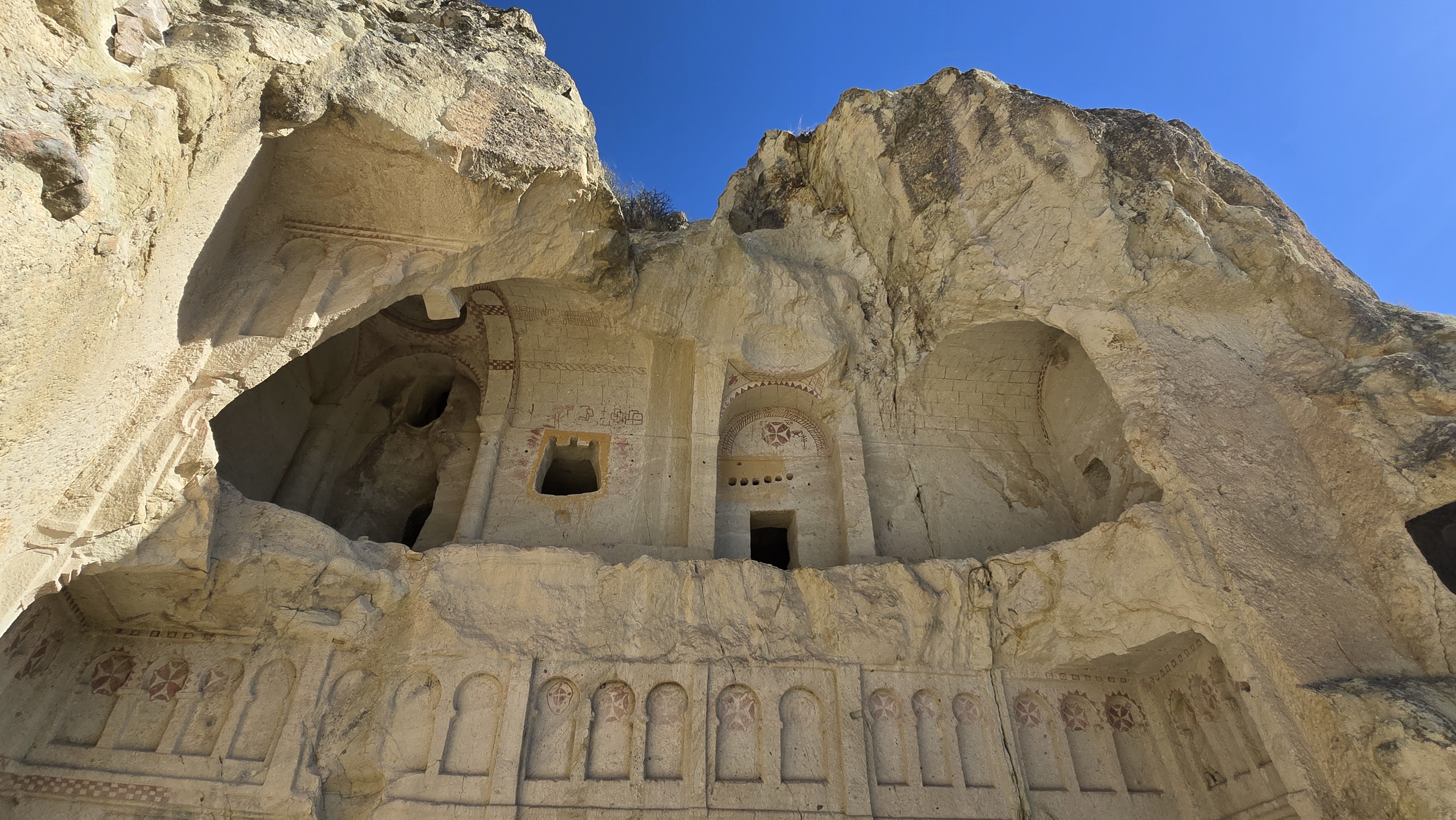
In Ortahisar, the Sivrikaya fortress is 90 meters high and is one of the largest examples of stone cones. The fortress is carved from natural rock and contains a church, storage facilities, and houses [4]. The Cambazlı Church in the fortress is a cross-in-square plan structure dating from the 13th century; frescoes adorn the walls. Frescoes are an art form, in a historical context, involving the painting of decorative images on churches or buildings [4]. Additionally, Ortahisar features a church known as the Üzümlü Church, dating from the 8th or 9th century [4].
In both fortresses, houses and cold storage facilities carved into the stone cones are notable. These stores hold products such as oranges, apples, and potatoes. The walls of the stores are built with tuff (a type of soft volcanic stone) and designed to maintain a constant temperature [2]. Tuff is a type of soft stone; this stone is obtained from natural rock formations and provides durability in construction.
Regarding further architectural details of Uçhisar Castle, the stonework and spatial arrangement within the fortress are striking. Although the castle is a structure carved from natural rock, it contains rooms and halls connected by narrow passages. Some of these passages may date back to the Byzantine period. The stonework in the castle carries aesthetic value beyond merely adapting to nature.
In Ortahisar, the Sivrikaya fortress is one of the largest examples of stone cones. The fortress is carved from natural rock and contains a church, storage facilities, and houses [4]. The Cambazlı Church in the fortress is a cross-in-square plan structure dating from the 13th century; frescoes adorn the walls. Additionally, Ortahisar features a church known as the Üzümlü Church, dating from the 8th or 9th century [4].
In both fortresses, houses and cold storage facilities carved into the stone cones are notable. These stores hold products such as oranges, apples, and potatoes. The walls of the stores are built with tuff (a type of soft volcanic stone) and designed to maintain a constant temperature [2].
Visiting Notes
- Opening Hours: There is no official information regarding the opening hours of Uçhisar Castle. The Sivrikaya fortress in Ortahisar is open to tourists in the morning and afternoon [4].
- Fees: No direct information is provided regarding entry fees for the fortresses.
- Access: Uçhisar is 6 km from the center of Nevşehir; Ortahisar is 5 km from Ürgüp. Both fortresses are accessible by bus or private vehicle [1][2].
Points of Interest:
- On the road to Uçhisar Castle, houses and churches carved into the stone cones can be visited. These structures can be part of a historical tour [3].
- The Sivrikaya fortress in Ortahisar is located in the center of the town. On the way to the fortress, one can also visit other historical churches and cold storage facilities in the area [4].
Extra Information
Surrounding Uçhisar Castle are examples of Cappadocia’s characteristic vernacular architecture. These structures are described as houses and cold storage facilities carved from stone cones [2]. In Ortahisar, natural beauties such as the Damsa River valley and the Talaş Stream await visitors.
The historical importance of Uçhisar Castle lies not only in its architectural value but also in its cultural heritage. The stonework and spatial arrangement in the castle carry the traces of different communities from Antiquity to the present day.
In Ortahisar, the Sivrikaya fortress is one of the largest examples of stone cones. The fortress is carved from natural rock and contains a church, storage facilities, and houses [4]. The Cambazlı Church in the fortress is a cross-in-square plan structure dating from the 13th century; frescoes adorn the walls. Additionally, Ortahisar features a church known as the Üzümlü Church, dating from the 8th or 9th century [4].
References
- [1] “Uçhisar Kalesi - Vikipedi”, https://tr.wikipedia.org/wiki/U%C3%A7hisar_Kalesi
- [2] “Ortahisar, Ürgüp - Vikipedi”, https://tr.wikipedia.org/wiki/Ortahisar,_%C3%9Crg%C3%BCp
- [3] “Uçhisar - Wikipedia”, https://en.wikipedia.org/wiki/U%C3%A7hisar
- [4] “Ortahisar, Nevşehir - Wikipedia”, https://en.wikipedia.org/wiki/Ortahisar,_Nev%C5%9Fehir
Konum
Harita: © OpenStreetMap katkıcıları. Haritada büyüt · Google Haritalar · Apple Haritalar
İşaret yaklaşık konumu gösterir; kesin konum için yerel kaynaklara bakın.
This article is compiled from scholarly monographs and official architectural inventories. Please verify site access conditions, visiting hours, and ongoing conservation status via official heritage authorities prior to visiting.
.jpg)