
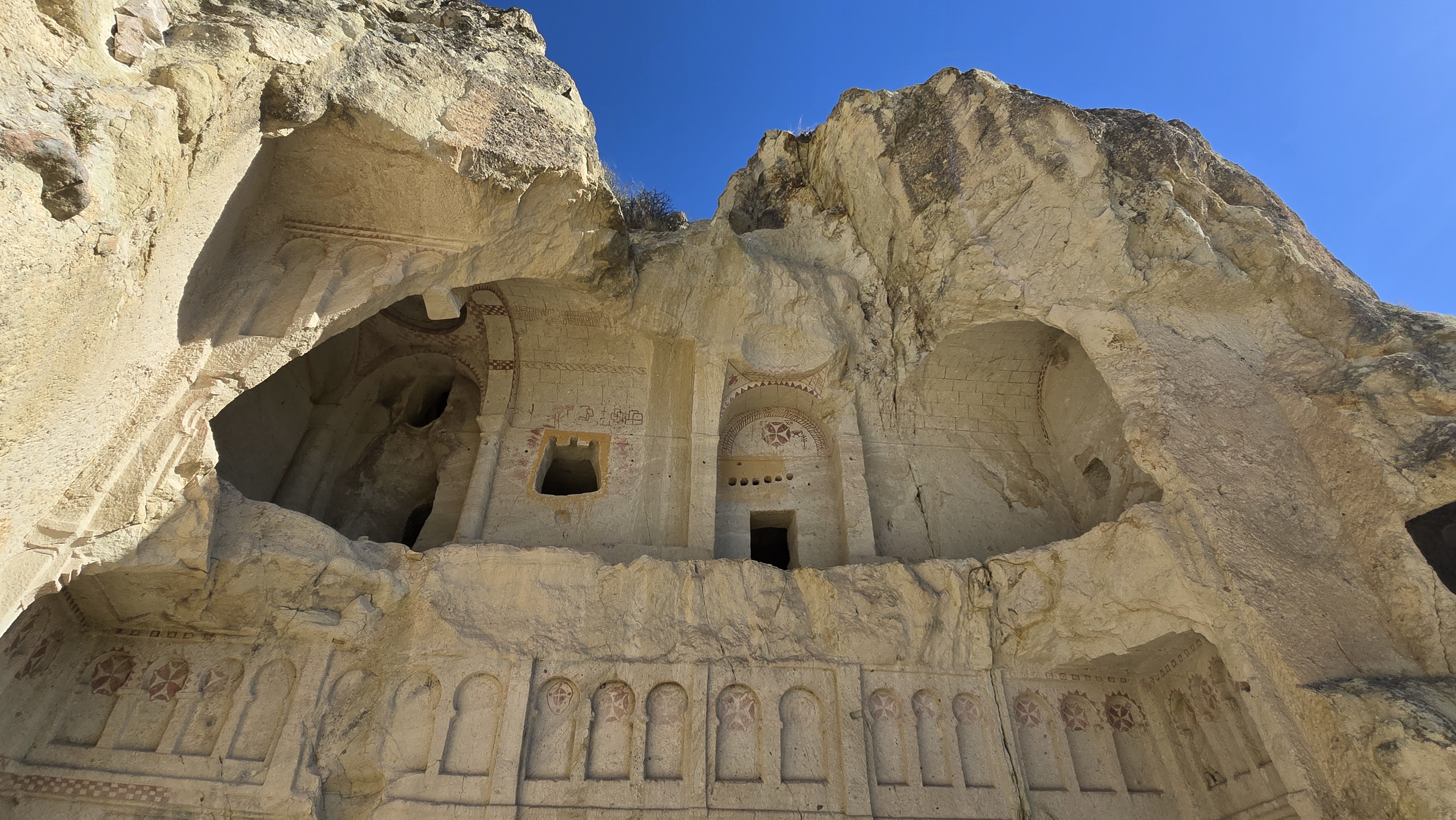
Overview
- What? A rock-cut Byzantine church in Cappadocia adorned with vibrant wall paintings (frescoes).
- Where? Located within the grounds of the Göreme Open Air Museum in the Göreme district of Nevşehir Province.
- Why is it important? It represents an exemplary specimen of Middle Byzantine (9th–12th centuries) architecture and houses exceptionally well-preserved wall paintings (frescoes).
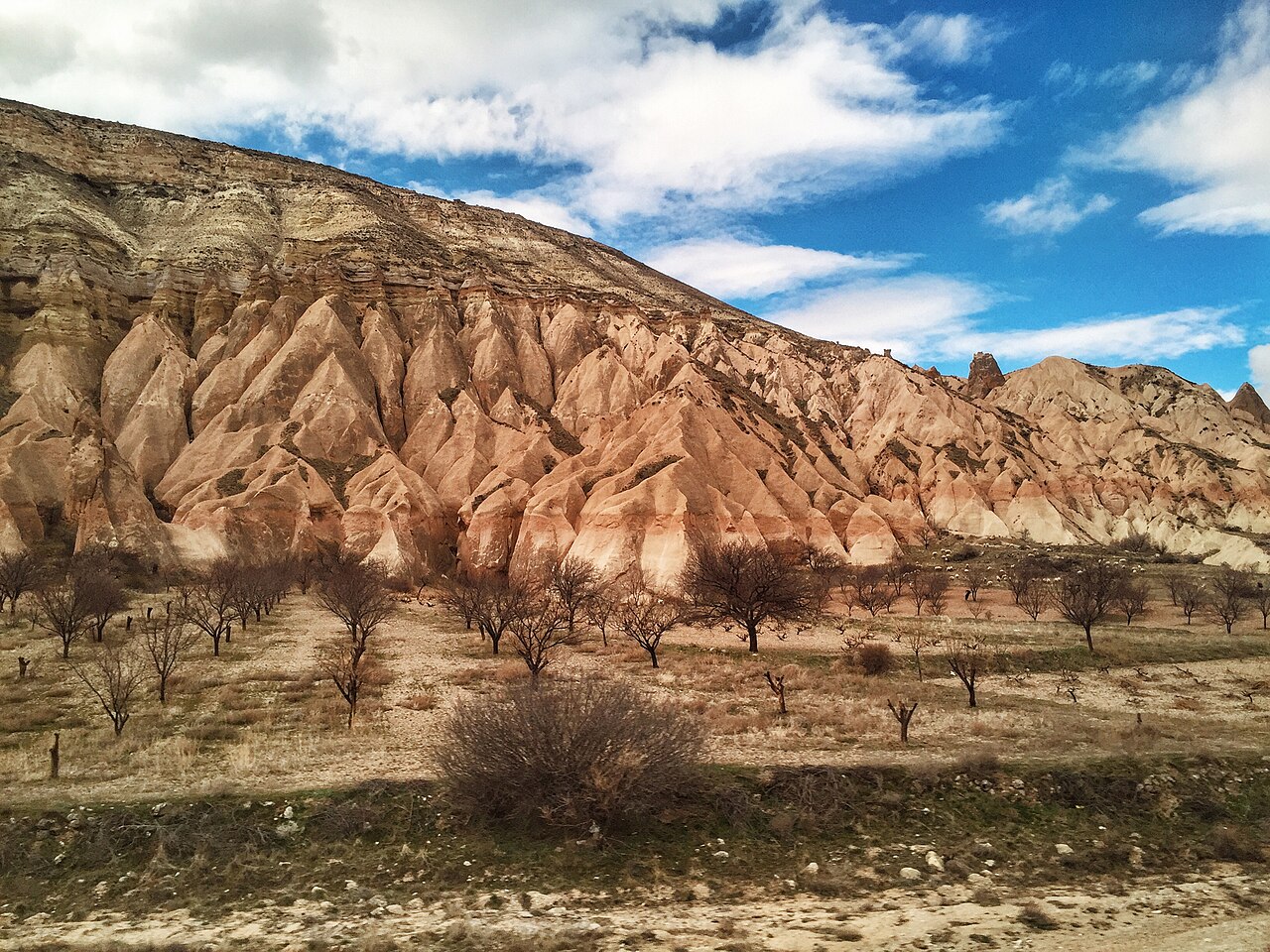
Among the fairy chimneys of Göreme rises a structure hollowed directly into the soft tuff rocks (an easily carveable stone formed by compacted volcanic ash and debris). The Dark Church (Karanlık Kilise) derives its name from the shadowy ambiance of its interior; daylight filters through only sparingly, illuminating the frescoes on its walls with dramatic intensity. Within this secluded sanctuary, visitors encounter some of the most radiant achievements of Byzantine art.
The Göreme Open Air Museum encompasses a cluster of churches and monastic complexes fashioned by human hands out of this yielding volcanic tuff. From the 4th century onwards, the region served as a place of monastic retreat (secluded worship and prayer) for Christian ascetics; following the Iconoclastic controversy (an era during which religious imagery and icons were prohibited and destroyed), the sanctuaries were embellished with lavish frescoes [1]. The Dark Church stands as one of the most exquisite testaments to this historical evolution.
Where is it?
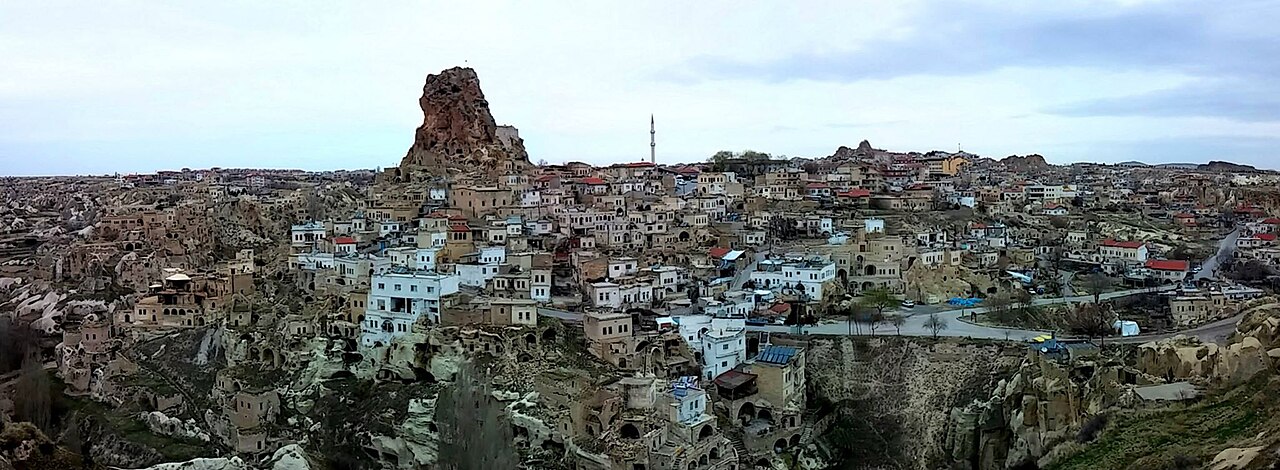
Göreme is situated in southeastern Central Anatolia, set upon extensive deposits of volcanic tuff generated by ancient volcanism. The settlement’s geographic coordinates are officially documented as 38°40′ N 34°50′ E [1]. The Dark Church is located within the Göreme Open Air Museum alongside five other Byzantine churches; the museum safeguards both the cultural heritage (the historical, artistic, and societal values handed down across generations) and the natural landscape of the territory [2].
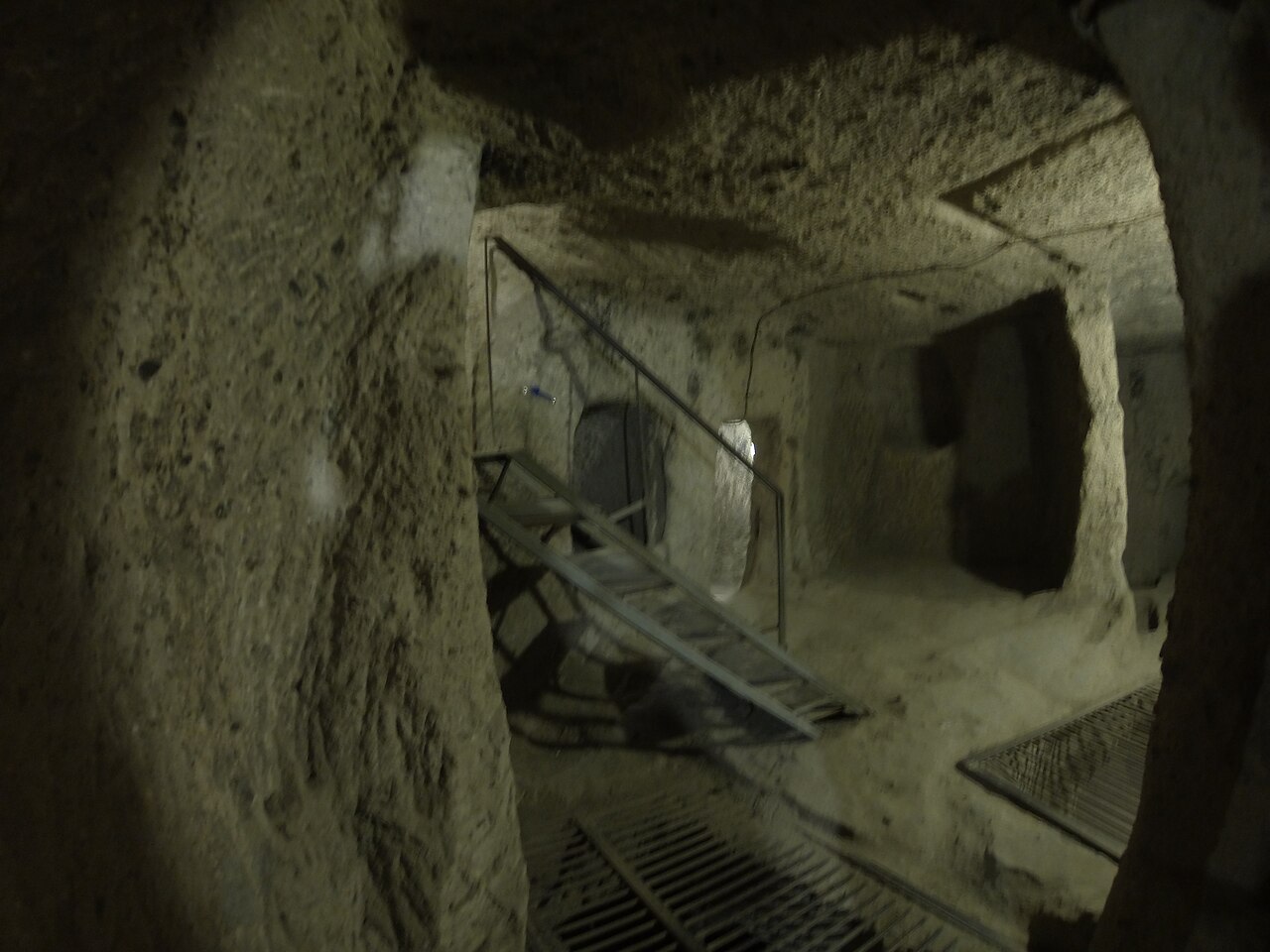
The church was fashioned by excavating an inner chamber directly into the natural rock formation—a method enabled, like that of neighboring Göreme monuments, by the workable nature of soft volcanic tuff [1]. Nearby stand kindred rock-hewn sanctuaries such as the Snake Church (Yılanlı Kilise), the Sandal Church (Çarıklı Kilise), and the Buckle Church (Tokalı Kilise), all carved within the very same geological framework [2].
History & Origins
The Dark Church is dated to the Middle Byzantine period (roughly the 9th to 12th centuries), an era marked by a resurgence of sacred iconography (the depiction of holy figures) across Byzantine art [2]. The creation of the sanctuary is regarded as an outgrowth of a continuous monastic tradition that had flourished in the region since the 4th century, when monks hollowed out subterranean retreats in accordance with the teachings of Saint Basil (one of the foundational Church Fathers) [1].
Throughout the Iconoclastic period (725–842), decorative programs were kept strictly minimal, dominated largely by unadorned crosses and simple motifs [1]. Following this upheaval, church interiors were once again graced with polychrome frescoes; the Dark Church itself is a direct product of this post-iconoclastic revival (“post-” denoting the era following Iconoclasm) [1]. These murals affirm that the church remained an active place of Christian worship until the Greco-Turkish population exchange of 1923 [1].
An epigraphic inscription carved into the wall portrays a donor named “Ioannes” (John) kneeling reverently before Christ; an updated reading of the Greek text indicates that the phrase “ἐντάλματί σου” (“by thy command”) signifies that the donor acted “by the command of Christ” [3]. This documentary nuance provides deeper insight into the socio-religious life surrounding the monument.
Architectural Form
Like many of Göreme’s rock-cut sanctuaries, the Dark Church is laid out as a vaulted, tunnel-like chamber excavated out of soft volcanic tuff. Its interior comprises a primary nave (the principal liturgical space) and an apse (the semicircular recess housing the altar) along the eastern wall; the apse displays the highest concentration of murals [1]. The rock surface was pretreated with a fine layer of plaster (a wash of lime and water applied to smooth the bedrock and ensure pigment adherence) and subsequently painted with natural pigments (mineral colorants)—a widespread technique in Byzantine wall painting [1].
The frescoes illustrate fundamental themes of Christian iconography (the visual repertoire of religious symbols and narratives), most notably Christ Pantocrator (“Ruler of All”) and the Crucifixion (the narrative depicting Christ on the cross). The color palette reveals an exuberant blend of red (iron oxide), blue, and golden hues, underscoring the murals as an “unrivaled artistic achievement” [1].
From an architectural standpoint, access to the church is mediated by a narrow entrance corridor. This passage strictly restricts incoming daylight, casting the interior into deep shadow and providing the direct rationale for the monument’s name. The rock-cut ceiling displays a subtle curvature, a structural feature that also lends a soft, resonant quality to liturgical chants.
The walls also bear the inscription detailing the donor’s identity and a prayer formula, a text scrutinized in Antonis Tsakalos’s 2011 epigraphic study, which proposed a revised reading [3]. The contents of this inscription shed light on the material and spiritual patrons who sustained the church.
Visiting Notes
The Dark Church can be reached on foot from the entrance of the Göreme Open Air Museum; admission is paid according to the fee schedule published on the official website [4]. The museum welcomes visitors from morning through late afternoon on scheduled days; nevertheless, as visiting hours vary seasonally, consulting the official timetable beforehand is advised [4].
Due to the sensitive lighting conditions of the interior, flash photography is strictly forbidden, ensuring the long-term preservation of the original pigments [1]. Visitors are requested to keep voices low, respecting an environment conceived for contemplative reflection and prayer.
The church forms part of the Göreme Open Air Museum, inscribed on the UNESCO World Heritage List (a registry compiled by the United Nations Educational, Scientific and Cultural Organization to safeguard sites of outstanding universal value to human civilization and nature); this status ensures state-backed conservation and structural maintenance [2]. Visitors are expected to comply with conservation guidelines and refrain from touching the historic surfaces.
In terms of transport, Göreme can be accessed by bus or taxi via the Nevşehir bus terminal or Kayseri Airport; the open-air museum is situated within easy reach of the local bus stops. Those traveling by private vehicle should note that the museum’s parking area has limited capacity; public transport remains a practical alternative during peak periods [4].
Additional Information
The seven Byzantine churches preserved within the Göreme Open Air Museum rank among the foremost surviving benchmarks of Middle Byzantine architecture. This group includes the Church of St. Basil, the Apple Church (Elmalı Kilise), the Church of St. Barbara, the Snake Church (Yılanlı Kilise), the Dark Church (Karanlık Kilise), the Sandal Church (Çarıklı Kilise), and the Buckle Church (Tokalı Kilise) [2]. Each is recognized for distinctive architectural traits; for instance, the Buckle Church features a grand Crucifixion scene across its apse wall, whereas the Apple Church is distinguished by an exceptionally dense narrative iconographic cycle.
The architectural plan of the Dark Church was deliberately adapted to the natural bedding of the volcanic tuff. The entrance corridor curtails daylight penetration, creating the subterranean, shaded interior. In the apse, the figure of Christ Pantocrator anchors the decorative program as a paramount symbol of Christian theology [1].
The pigments applied across the walls were drawn from natural mineral sources, encompassing shades of red (derived from iron oxide), blue, and gold (a sulfur-bearing yellow pigment). This application method is central to Byzantine mural traditions; preserving the frescoes over centuries required the underlying plaster layer to be remarkably thin and uniform [1].
The phrase “ἐντάλματί σου” inscribed within the church records that the donor acted under the direct command of Christ. Re-examined in 2011 by Antonis Tsakalos, this epigraph received an interpretation distinct from earlier readings [3]. Such documentary details provide a far richer understanding of the church’s intertwined devotional and communal milieu.
Conservation & Historical Value
Following the inclusion of the Göreme Open Air Museum on the UNESCO World Heritage List, preservation and conservation efforts have received systematic state-level support [2]. Under the “Conservation-Oriented Development Plan” ratified in 1987, the monumental structures within the Göreme Urban Archaeological Site were formally registered as tangible cultural heritage (physical, non-movable heritage assets). In accordance with this plan, monuments such as the church remain protected within an expansive perimeter flanked by natural and urban conservation zones [4].
The architectural and art-historical value of the Dark Church was analyzed in detail in a 2023 scholarly study by Ayşe Özaydın Sipahi and Firdevs Kulak Torun. The researchers underscored that the church embodies the defining traits of Middle Byzantine ecclesiastical architecture, characterized by rock-hewn tuff excavation, calculated placement of fresco cycles, and the incorporation of dedicatory inscriptions [2].
Conclusion
The Dark Church stands as one of the most prominent monumental works within the Göreme Open Air Museum. Possessing profound historical, architectural, and artistic significance, this sanctuary offers visitors an evocative cultural encounter through its surviving 13th-century frescoes. Exploring both its natural rock architecture and its historic legacy provides a deeper insight into the enduring heritage of Göreme.
References
- [1] “Churches of Göreme - Wikipedia”, https://en.wikipedia.org/wiki/Dark_Church
- [2] “Göreme Açık Hava Müzesi’nde Yer Alan Bizans Kiliseleri — Ayşe Özaydın Sipahi, Firdevs KULAK TORUN (2023, NEU Journal of Faculty of Architecture)”, https://dergipark.org.tr/tr/download/article-file/3348579
- [3] “«Ἐνtaλματικοῦ» ou «ἐντάλματί σου»? Nouvelle lecture de l’inscription d’un donateur à Karanlik kilise (Göreme, Cappadoce) — Antonis Tsakalos (2011)”, https://ejournals.epublishing.ekt.gr/index.php/deltion/article/download/4123/3898
- [4] “EXAMINATION OF THE MONUMENTAL BUILDINGS OF GÖREME IN THE SCOPE OF THE PROTECTION OF THE TANGIBLE CULTURAL HERITAGE — Çiğdem Belgin Dikmen, Ferruh Toruk (2021)”, https://dergipark.org.tr/tr/pub/asobid/issue/66450/1000839
Konum
Harita: © OpenStreetMap katkıcıları. Haritada büyüt · Google Haritalar · Apple Haritalar
İşaret yaklaşık konumu gösterir; kesin konum için yerel kaynaklara bakın.
This article is compiled from scholarly monographs and official architectural inventories. Please verify site access conditions, visiting hours, and ongoing conservation status via official heritage authorities prior to visiting.