

Summary
- What: A monumental Ottoman stone bridge with 174 arches, figural animal carvings, and Kufic inscriptions constructed during the reign of Sultan II. Murad over the Ergene River and its tributaries Şoldrak and Kırkkavak [1].
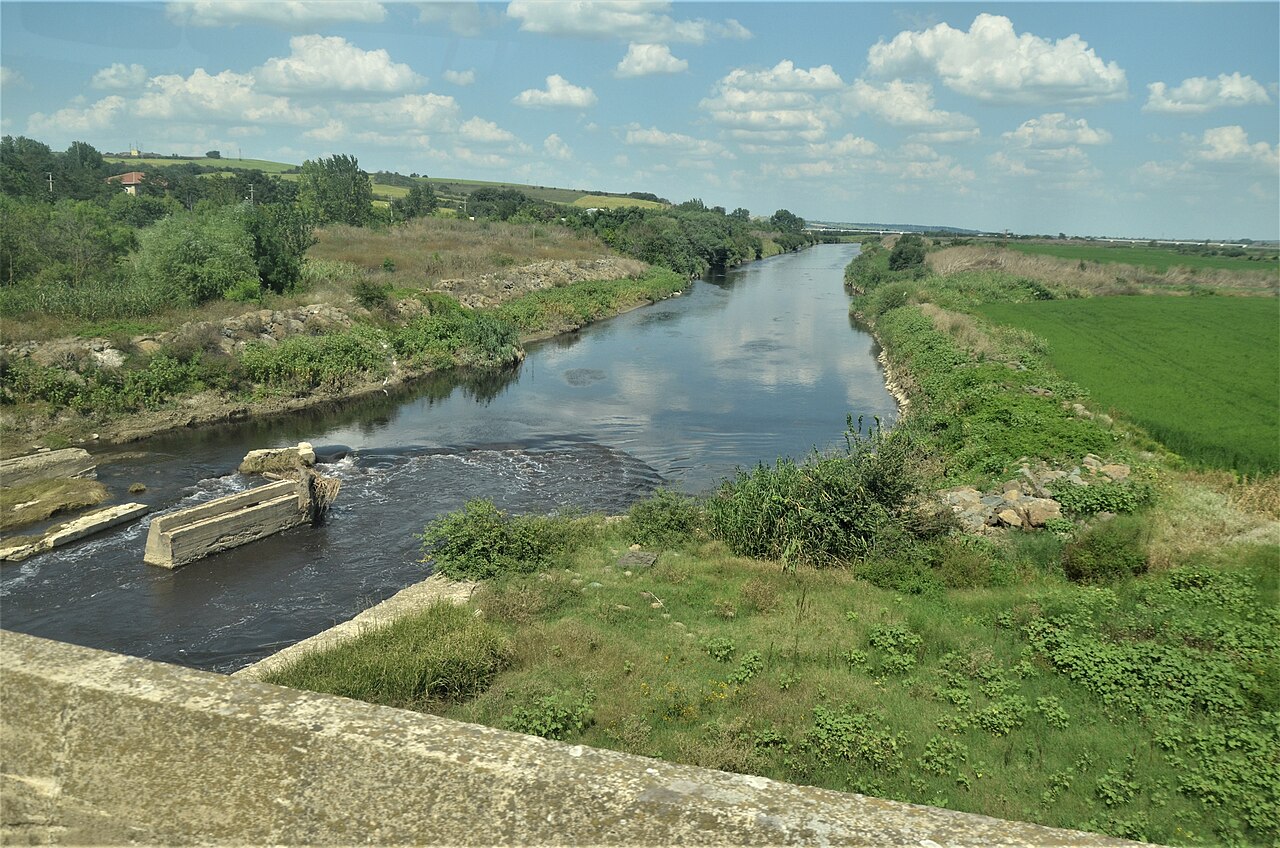
- Where: Located in Uzunköprü district center, Edirne province, spanning the Ergene floodplain [1, 2].
- Why significant: At 1,238 meters in length, it is one of the world’s longest surviving medieval stone bridges, featuring triangular cutwaters (mahmuz), discharge eyes (tahliye gözleri), and unique heraldic carvings [1].
The monumental structure named after the modern district of Uzunköprü (formerly Ergene) was constructed in the mid-15th century over the Ergene River [1, 2]. According to Âşıkpaşazâde and Hoca Sâdeddin Efendi’s Tâcü’t-tevârîh, construction began in 829 AH (1426) and was completed in 847 AH (1443), with the bridge inaugurated following Sultan II. Murad’s return to Edirne after the Battle of Varna [1]. The opening ceremony featured military parades, torchlight displays, and recitations of mevlids [1].
Historical Context and Construction Process
Spanning 16–18 years under Sultan II. Murad’s reign, the bridge was constructed by Mimar Muslihuddin and Usta Mehmed under the supervision of Timurtaş Bey, his son Osman Çelebi, and brother Gazi İshak Bey [1].
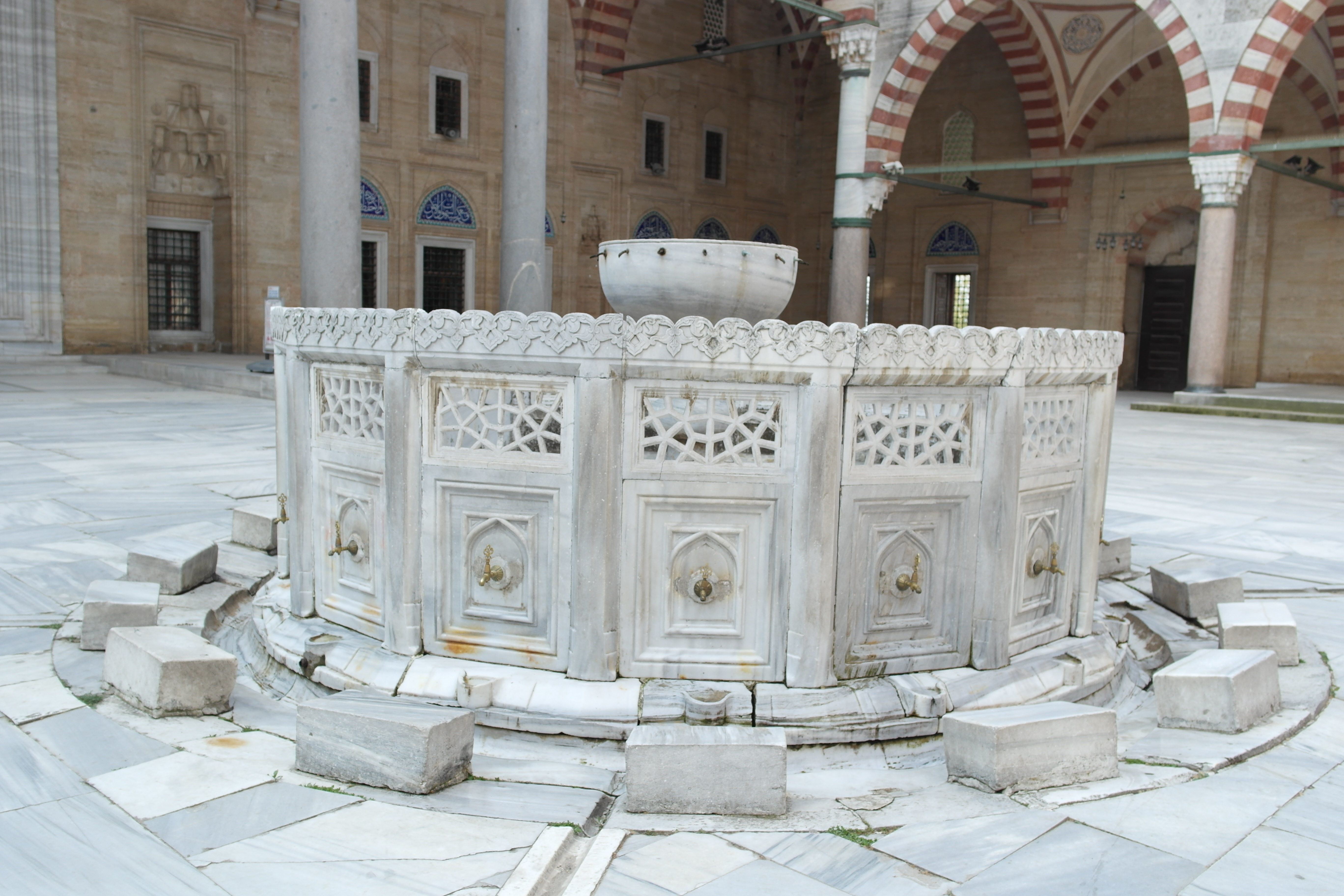
Built using stone quarried from Eskiköy, Kuleliburgaz, Taşçıarnavut villages, and Kestanbolu and Süleymaniye settlements, the structure features an inscription on its marble base in large cursive script [1]. During a restoration under Sultan II. Abdülhamid, this inscription was relocated to a fountain known as Gazi Mahmud Bey or Köprübaşı Çeşmesi [1]. The two-line inscription at the corners includes Sultan II. Murad’s name and the date 847 AH (1443), with the phrase “This bridge has one hundred seventy-four eyes” inscribed in the upper right corner [1].
A single inscription column is embedded between balustrade stones on the upstream side; while faint traces of writing are visible within a rectangular frame, it remains illegible due to damage [1]. İsmail Hakkı Balkas noted another inscription attributed to the architect on one of the arches over Kırkkavak stream, though this has not survived to the present [1].
Engineering Solutions and Flood Architecture
Originally 1392 meters long and 5.24 meters wide, the bridge now measures 1238.55 meters in length and 6.90 meters in width [1]. Comprising 174 arches, its largest span reaches 14 meters [1]. Due to sedimentation, only 164 of these openings remain functional today [1].
The arches are pointed or rounded, with arches numbered 147 and 148 being notably wider and taller than others [1]. Cutwaters (mahmuzlar) on the upstream and downstream sides are triangular in shape, each containing drainage apertures [1].
Spanning the Ergene River, Şoldrak, and Kırkkavak streams, the bridge was constructed with six undulating sections due to topographic constraints and technical requirements [1]. Historical records indicate two grain mills were located near the bridge’s largest arch; the upstream mill collapsed during the 1956 flood [1]. In the 1970s, Karayolları expanded the bridge by enlarging its parapet consoles and widening the structure to 1.70 meters between balustrades to accommodate two vehicles [1].
Stone Decoration, Animal Figurines, and Historical Inscriptions
The bridge’s decorative elements include geometric, vegetal, epigraphic, and figural motifs on the spaces between piers, as well as on keystones connecting arches [1].
Notably, three distinct Kufic inscriptions of the word “Ali” appear in three repetitions, accompanied by figural carvings of a hawk, bird, elephant, and three lions [1]. Three lion figures with rounded heads are united within a circular frame; additionally, during the 1972 restoration, workers carved another lion relief on the balustrade of the central arch’s triangular cusp [1]. This lion is depicted with its tail parallel to its back, chained, and flanked by a pot and branch on one side, while the reverse features an elephant carving [1].
On keystone surfaces, the initials of “Ali” are inscribed three times within hexagonal frames, centered in the middle. One keystone bears the phrase “el-Mülkü lillâh” (“The Kingdom belongs to God”) within a frame [1]. The bridge’s main arch features a historical inscription tablet, while two viewing balconies exist on arches numbered 40–41 and 102–103 [1]. Near the eastern end, an octagonal relief of a star and leafy branch once existed but was destroyed by a water pipe installation [1]. Twenty-eight circular stones remain in the balustrades [1].
Cisr-i Ergene Settlement and Waqf Endowments
Sultan II. Murad established this settlement—known as Cisr-i Ergene—with the bridge, along with a mosque, caravanserai, madrasa, hamam, thirty-three shops, oil press, tannery, textile workshop, candle factory, three fountains, and two watermills [1].
A dervish lodge (Mahmud Baba Sultan Tekkesi) was located at the bridge’s head [1]. Of these structures, only the bridge itself, Murâdiye Mosque, şadırvan, hamam, and Gazi Mahmud Bey Fountain survive today [1]. Additionally, parts of the balustrade stones on the bridge’s right side were removed by the municipality in 1908 for use in constructing fountains within the city [1].
Restoration History
The bridge has undergone repairs during the reigns of Fâtih Sultan Mehmed, II. Bayezid, II. Osman, II. Mahmud, and II. Abdülhamid, as well as in 1928, 1964, and 1972 [1]. According to Evliya Çelebi, one arch collapsed fourteen years after construction and was later restored [1].
A restoration inscription from the II. Mahmud period is recorded on the bridge’s historical tablet, derived from the Murâdiye Mosque inscription [1]. During Greek occupation, this inscription was replaced by a new one; additionally, a constitutional tower remains near the bridge’s left side related to the II. Mahmud restoration [1].
Frequently Asked Questions
- When and by whom was Uzunköprü constructed?
Built between 1426–1443 (829–847 AH) during Sultan II. Murad’s reign [1]. - Who were the architects and overseers of the bridge?
Constructed under Timurtaş Bey, Osman Çelebi, and Gazi İshak Bey by Mimar Muslihuddin and Usta Mehmed [1]. - What are the original and current dimensions of the bridge?
Originally 1392 meters long and 5.24 meters wide; currently 1238.55 meters long and 6.90 meters wide [1]. - How many arches does the bridge have?
Comprising 174 arches, only 164 remain open today due to sedimentation [1]. - What carvings and inscriptions are present on the bridge?
Features hawk, bird, elephant, three lion figures, Kufic “Ali” inscriptions, and the phrase “el-Mülkü lillâh” [1].
References
- [1] UZUNKÖPRÜ - TDV İslâm Ansiklopedisi (Dr. Nesrin Çiçek Akçıl, Vol. 42, pp. 266–267), https://islamansiklopedisi.org.tr/uzunkopru—ergene
- [2] EDİRNE - TDV İslâm Ansiklopedisi (Prof. Dr. Semavi Eyice, Vol. 10, pp. 425–431), https://islamansiklopedisi.org.tr/edirne
Konum
Harita: © OpenStreetMap katkıcıları. Haritada büyüt · Google Haritalar · Apple Haritalar
İşaret yaklaşık konumu gösterir; kesin konum için yerel kaynaklara bakın.
This article is compiled from scholarly monographs and official architectural inventories. Please verify site access conditions, visiting hours, and ongoing conservation status via official heritage authorities prior to visiting.
.jpg)